ServicesVinyl Composition Tile
Vinyl Composition Tile in La Porte
VCT is the hard-wearing limestone and vinyl tile built for rooms that take a beating: laundry rooms, garage conversions, workshops and playrooms. We test and prep your slab, set the tile in a square layout and apply the polish coats that protect it.
What VCT Is and When It Makes Sense
Vinyl composition tile is a 12-by-12-inch, 1/8-inch-thick tile made mostly of ground limestone bound with vinyl resin and pigment. The color runs through the full thickness, so a scuff or worn path never exposes a different layer underneath. It is the same tile you have walked on in schools and stores, and in your home it does the same job: taking abuse in rooms where durability matters more than softness.
The trade-off is upkeep. The limestone filler leaves the surface slightly porous, so VCT needs coats of polish to resist stains and hold its sheen, and it feels harder and cooler underfoot than luxury vinyl tile or luxury vinyl plank. If you want a floor you never maintain, those materials may suit you better. If you want an affordable tile that shrugs off boots, tools, a washer walking off balance and a daily mop bucket, VCT is hard to beat.
Most homes around here sit on concrete slabs, and in Gulf Coast humidity the moisture coming up through that concrete decides whether glue-down tile stays flat. That is why our work starts with the slab, not the tile.
What Our VCT Installation Includes
- Slab moisture testing
- We test the concrete for moisture vapor before choosing adhesive. Excess vapor softens VCT adhesive and lets tiles lift and curl at the edges, so we find it before the tile goes down.
- Removal of the old floor
- We pull up carpet, tack strip, sheet vinyl or loose tile. Older 9-inch tile and black cutback adhesive can contain asbestos, so we ask that they be tested first, and any abatement is handled by a specialist abatement contractor before we start.
- Patching and leveling
- VCT is thin and rigid, so it shows every glue ridge, crack and tack strip hole underneath. We scrape the slab clean and fill low spots and cracks with cement-based patch, then sand it smooth.
- Square layout and pattern
- We snap center lines so border cuts come out balanced on opposite walls. Solid field, checkerboard or accent stripes, and we follow the tile's directional pattern so every piece is laid the same way or quarter-turned on purpose.
- Adhesive, setting and rolling
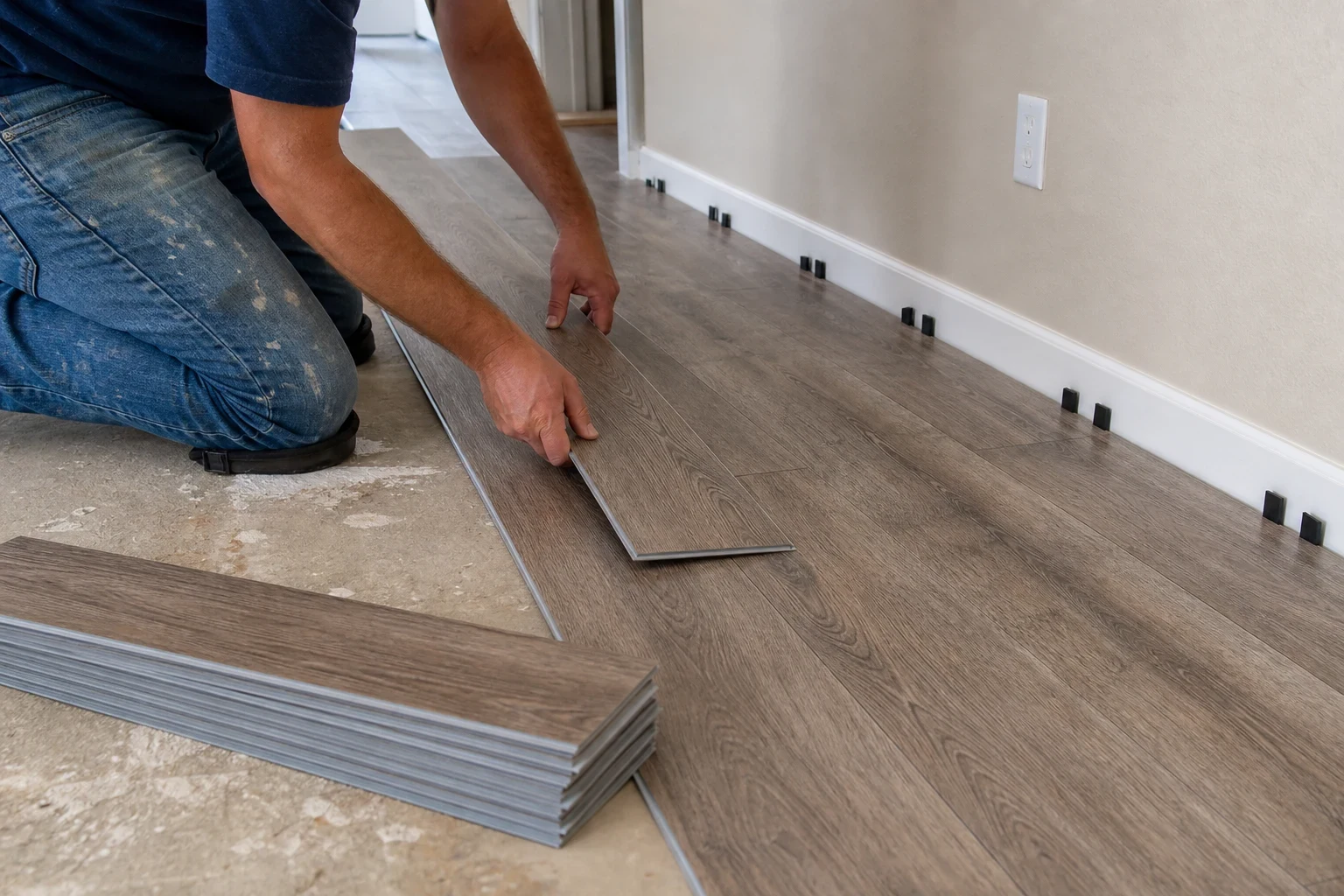
- Clear thin-spread adhesive goes down with the correct notched trowel and is left to tack up before tile is set. We roll the floor with a heavy roller to seat each tile and scribe cuts around door casings and the water heater pan.
- Polish coats and care notes
- Once the adhesive has set, we clean the floor and apply several coats of floor polish. You get plain instructions on cleaning products to use and avoid.
Signs VCT Is the Right Floor for You
Bare concrete that dusts and stains
A garage conversion, workshop or utility room on raw slab sheds dust and soaks up spills. VCT seals that surface with a floor you can sweep and mop.
Sheet vinyl torn near the washer
Laundry rooms wear out soft flooring fast. Individual tiles resist gouges, and if one gets damaged it can be cut out and replaced without redoing the room.
Old tile cracking or popping loose
Loose or broken tile usually means the old adhesive has failed. A new floor on a cleaned, patched slab fixes the cause, not just the look.
You want a checkerboard on a budget
VCT comes in dozens of solid colors, so a black-and-white kitchen or a colored border costs far less than ceramic.
How a VCT Job Runs
- 1
Talk it through by phone
Describe the space, the flooring you have now and how the room gets used. We will say honestly whether VCT, luxury vinyl tile or another material fits better.
- 2
Measure and test
We measure the room, check the slab for moisture and flatness and look at what has to come up. You get a written estimate that separates removal, prep and installation.
- 3
Prep and install
Most single rooms take a day or two. We protect nearby flooring, remove the old floor, patch the slab, then lay and roll the tile. Our crew is insured, and after more than 25 years in business we plan the cuts before the first tile goes down.
- 4
Polish and walk-through
After the polish coats dry, we walk the floor with you and go over care. Every installation carries our 1-year workmanship warranty.
What Moves the Price of a VCT Floor
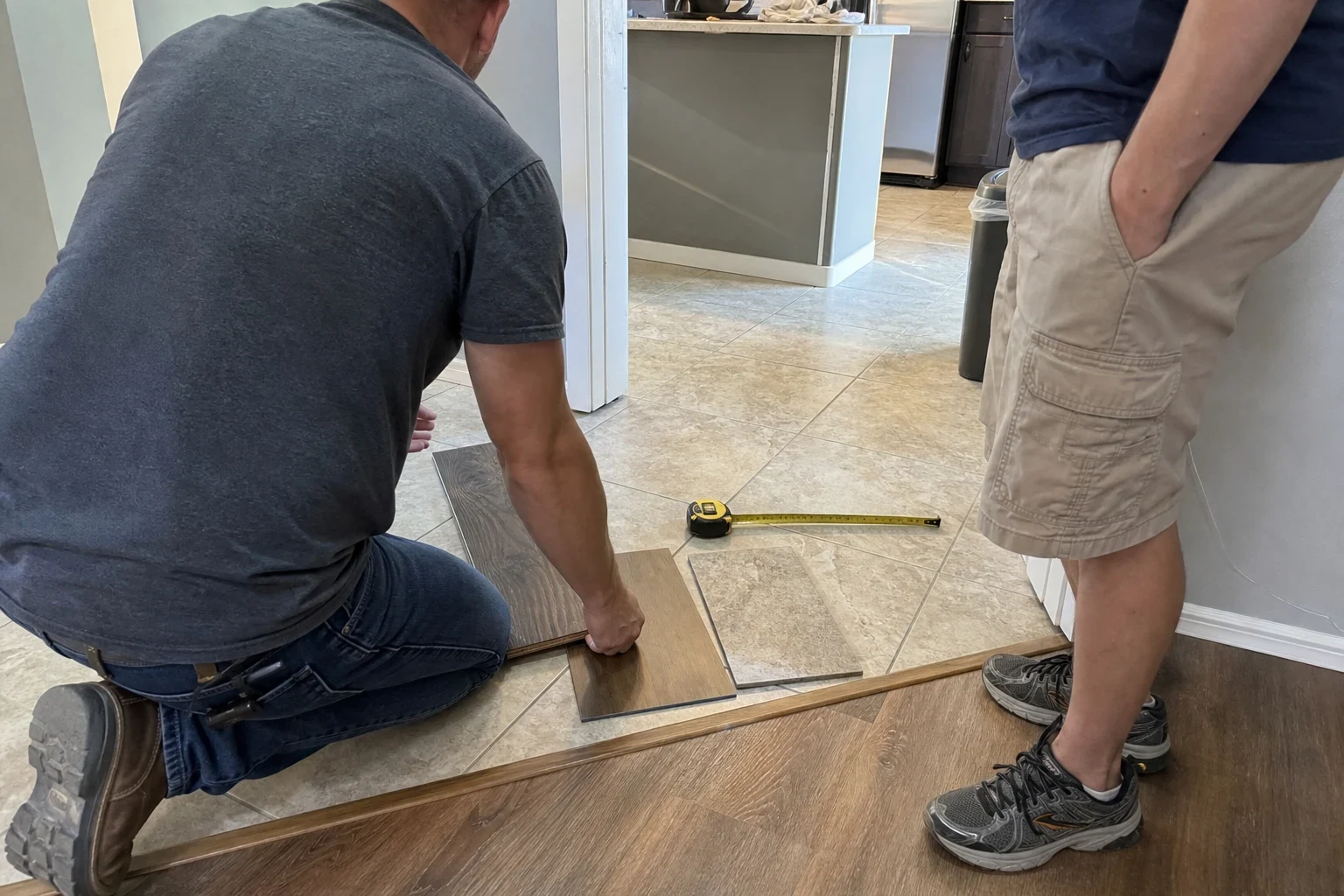
The tile itself is one of the least expensive flooring materials, so prep and labor make up most of the cost. Two rooms of the same size can price very differently depending on what is under the old floor. We price after seeing the slab, not before.
- Slab condition
- Deep cracks, uneven spots or high moisture readings add patching, leveling or a moisture-tolerant adhesive.
- What comes up first
- Carpet lifts quickly. Glued sheet vinyl or old tile takes longer, and suspect material needs testing before removal.
- Pattern and cuts
- A single-color field is fastest. Checkerboards, borders, stripes and rooms with many corners use more tile and labor.
- Room size and access
- Small rooms carry a minimum amount of setup. Moving a washer, dryer or workbench adds time.
VCT Questions We Hear
Something not covered here? (346) 248-3976
Is VCT the same as luxury vinyl tile?
No. VCT is mostly limestone with a vinyl binder, rigid and porous, and it needs polish. Luxury vinyl tile is a thicker, mostly vinyl product with a factory wear layer that needs no polish. VCT costs less and takes rough use well, while luxury vinyl tile looks more realistic and feels softer.
Does VCT really need waxing?
It needs polish, which most people call wax. We apply the first coats at installation. Over time you will want to add a fresh coat in heavy traffic areas to keep stains from settling into the surface.
Can VCT go in a bathroom?
It handles everyday splashes, but the seams between tiles are not watertight. Standing water from a tub overflow or toilet leak can reach the adhesive. For full bathrooms we usually point people toward tile flooring or luxury vinyl tile.
Can you lay VCT over my existing floor?
Usually we remove the old floor. VCT needs a flat, clean base that is firmly stuck down, and textured sheet vinyl or loose tile underneath will show through or let the new tile fail. Bare concrete is the ideal base.
How soon can I use the room?
Light foot traffic is usually fine once the polish dries. We ask that you hold off on rolling heavy appliances back in for about a day or two so the adhesive sets and tiles do not shift.
Is the installation covered?
Yes. Every installation, including VCT, comes with our 1-year workmanship warranty.
Put a Tougher Floor in Your Hardest-Working Room
Give us a quick picture of the space and the flooring that is down today. On the call we compare VCT with the other materials and explain what your slab will likely need before tile goes down.