ServicesCarpet Tile
Carpet Tile Installation in La Porte
Carpet tile gives you soft footing with a practical twist. Each square comes up on its own, so a juice spill or a pet accident means swapping one tile, not the whole floor. We help you choose the backing and pile, prep the subfloor and lay a clean grid.
What Carpet Tile Is and When It Fits
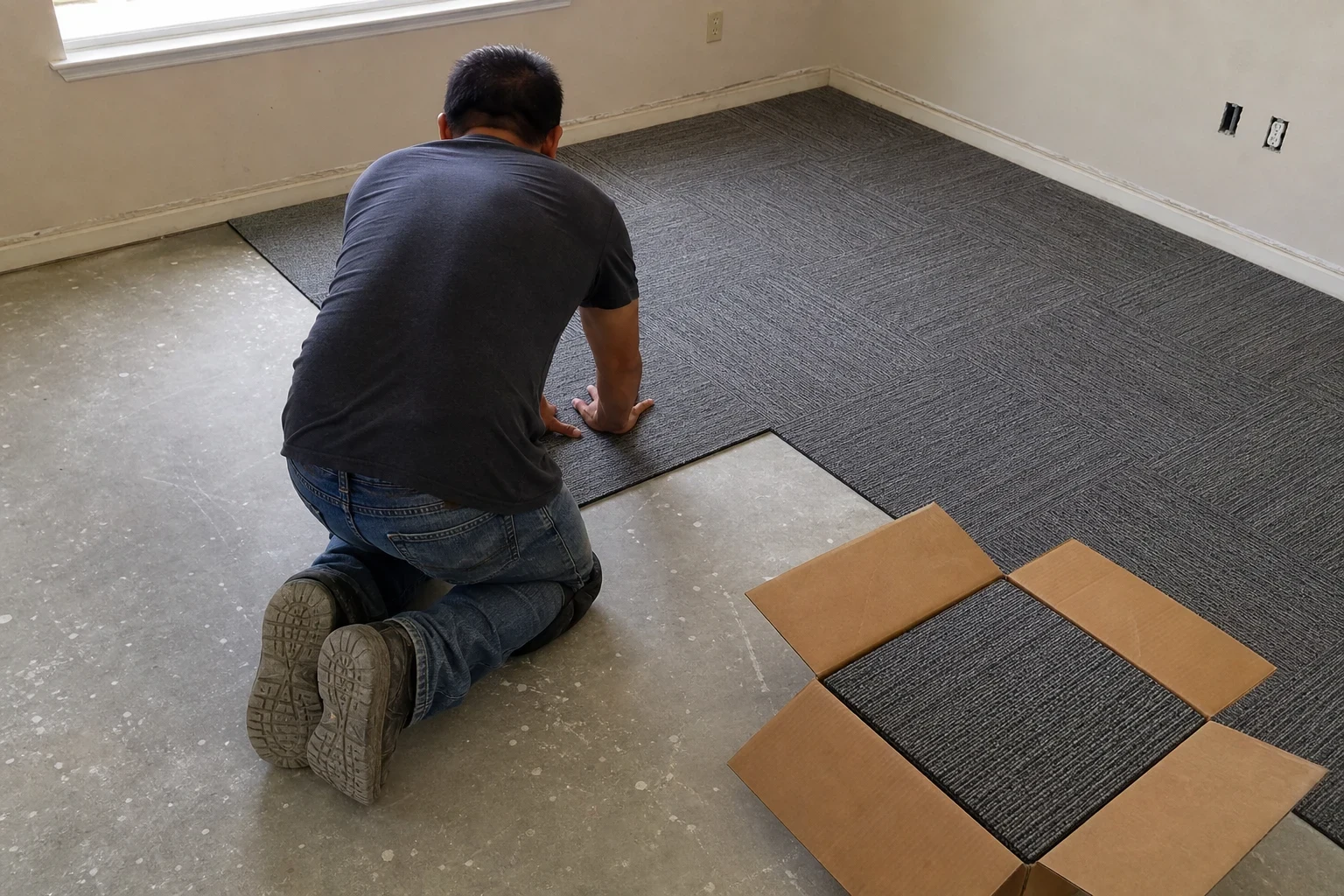
Carpet tile is carpet cut into modular units, usually 24-inch squares or 18 by 36 inch planks, bonded to a stiff backing. Instead of stretching broadloom over pad and tack strip, each tile is set on a releasable pressure-sensitive adhesive. The adhesive holds the tile flat but lets you peel it up later. The backing does the work a pad normally does, so there is no separate cushion underneath.
It suits rooms that take abuse: game rooms, home offices with rolling chairs, kids' bedrooms, home gyms and converted garages. The trade-off is feel. Most carpet tile is a dense loop or tight cut pile, firmer underfoot than a plush wall-to-wall carpet, and the seams between tiles stay faintly visible. If you want a deep, soft bedroom carpet, our carpet installation page is the better fit. If you want a floor you can repair in five minutes, carpet tile wins.
What Our Carpet Tile Work Includes
- Backing and pile guidance
- We explain the difference between hard PVC or polyolefin backings and cushion-backed tiles. Hard backings stay dimensionally stable and resist moisture. Cushion backs feel softer but cost more and need a flatter subfloor.
- Moisture testing on concrete
- Most homes here sit on a concrete slab, and slabs give off moisture vapor. We test before installing because excess moisture breaks down adhesive and can lead to odor under the tiles.
- Tear-out and floor prep
- We pull old carpet, pad and tack strip, scrape adhesive ridges, fill cracks and skim low spots with patching compound. Carpet tile telegraphs every bump, so prep decides how flat the finished floor looks.
- Layout and pattern setting
- We snap center lines and plan the grid so cut tiles at the walls are balanced, not slivers. You choose monolithic, quarter-turn, ashlar or brick installation, and we keep the arrows on the backing pointed the right way.
- Transitions and attic stock
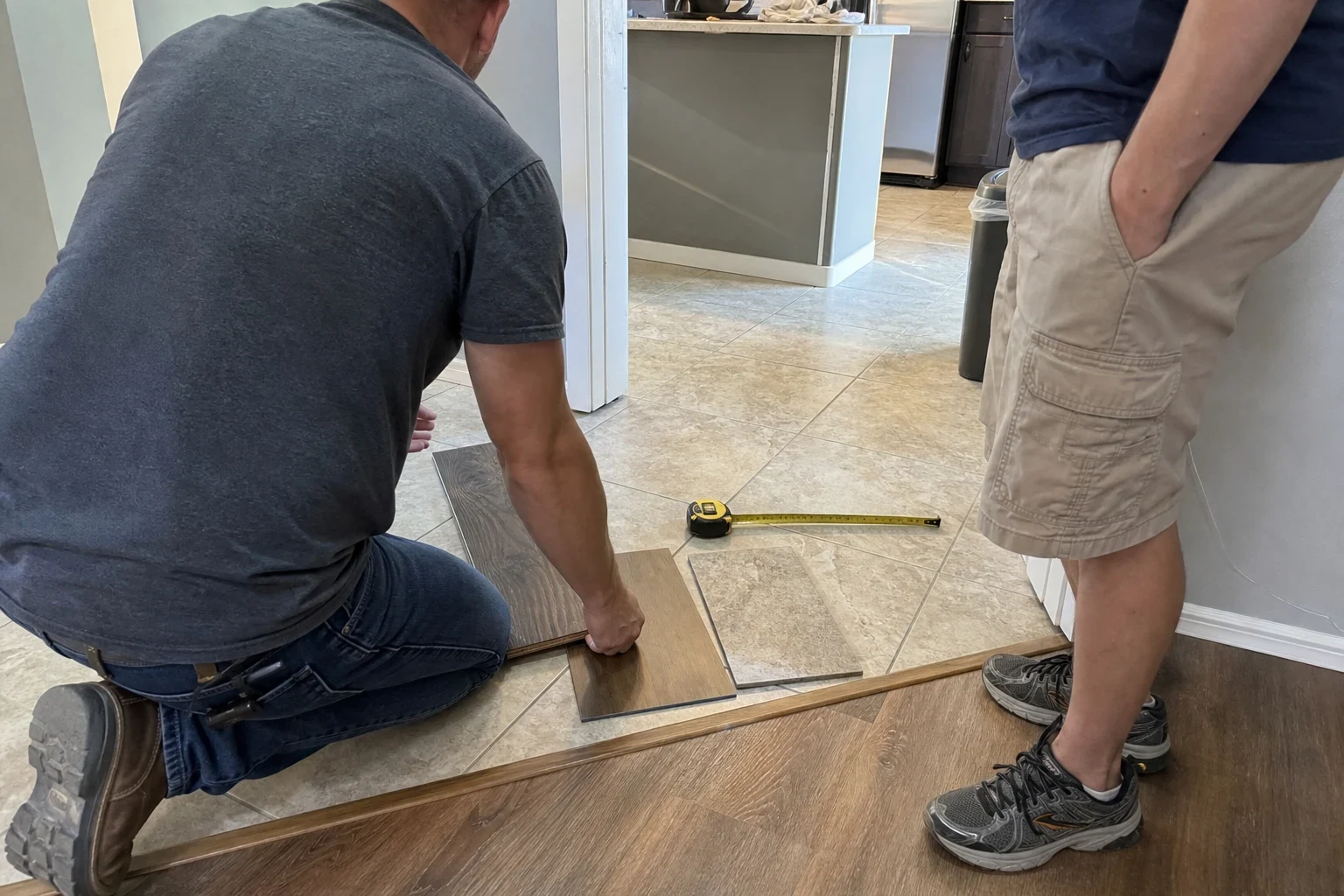
- We fit reducers where tile meets hard flooring and leave a box of spare tiles from the same dye lot, so future replacements match in color.
Signs Carpet Tile Makes Sense for Your Home
The same spot keeps staining
If one area by the sofa or the back door is always the problem, modular tiles let you replace just that area.
Pets or kids are hard on the floor
Accidents soak into broadloom pad. A hard-backed tile has no pad to absorb them, and a ruined tile simply comes out.
Rolling chairs are crushing the carpet
Office chairs flatten plush pile and loosen stretched carpet. A dense loop tile handles casters much better.
Your broadloom keeps rippling
Ripples come from a stretched carpet losing tension. Glued tiles have no stretch to lose.
A garage conversion or bonus room
Rooms on bare concrete are good candidates, as long as the slab passes a moisture check first.
How a Carpet Tile Job Runs
- 1
Measure and test
We measure each room, note doorways and closets, and test the slab for moisture. You get a written estimate that separates materials, prep and labor.
- 2
Clear and prep the subfloor
On install day we move standard furniture, remove the old flooring and grind or patch the slab until it is flat and clean. Dust and old adhesive are what make tiles lift, so this step is not rushed.
- 3
Spread adhesive and lay the grid
We roll on releasable adhesive and let it dry to a tacky film before setting tiles. Tiles start at the center line and work outward, butted tight with no gaps.
- 4
Cut in, trim and clean up
Edge tiles are cut to the wall, transitions go in and we vacuum the floor. Most rooms are walkable the same day, and furniture can go back right away.
What Moves the Price of Carpet Tile
Carpet tile is priced by the square yard or by the carton, but the tile itself is only part of the number. Prep and layout often move the total more than the product. We price your rooms by phone and in writing, with each line explained.
- Backing and construction
- Cushion-backed and heavier face-weight tiles cost more than standard hard-backed loop tiles.
- Slab condition
- Cracks, old glue ridges and uneven patches add grinding and leveling time. A high moisture reading may call for a moisture-tolerant adhesive.
- Removal of existing flooring
- Pulling carpet and pad is quick. Scraping glued-down vinyl or old mastic takes longer.
- Room shape and pattern
- Closets, angled walls and ashlar or brick patterns raise cutting time and waste compared with a square room in a monolithic layout.
Carpet Tile Questions We Hear
Something not covered here? (346) 248-3976
Can I really replace just one tile?
Yes. Because the adhesive is releasable, you lift the damaged tile with a putty knife and press a spare into place. That is why we leave extra tiles from the same dye lot. A replacement from a different lot can be a shade off.
Is carpet tile a good idea on a slab in this humid climate?
It can be, if the slab tests within the adhesive maker's limits. Gulf Coast humidity and slab moisture are the main causes of tiles releasing or smelling musty. We test first and tell you plainly if another material, like luxury vinyl tile, would hold up better in that room.
How is this different from your carpet installation service?
Carpet installation means broadloom stretched over pad and tack strip, softer and with fewer seams. Carpet tile is glued in squares, firmer, and easier to repair. Many homeowners use broadloom in bedrooms and tile in high-use rooms.
Does carpet tile need a pad?
No. The backing replaces the pad. Adding cushion underneath would let tiles shift and open their seams.
Who stands behind the installation?
We do. Flooring La Porte has been in business 25+ years, and our crews work in your home as an insured company. Every carpet tile job carries our 1-year workmanship warranty, which covers how the tiles were laid, from adhesive to seams.
Ready to Compare Carpet Tile Options?
Tell us about the room, the slab and how it gets used. We will explain which backing and pattern suit it and walk you through pricing.