ServicesCarpet Installation
Carpet Installation in La Porte, From Fiber to Pad
We install wall-to-wall carpet in bedrooms, living rooms and game rooms, and we start by explaining what you are buying: the fiber, how the pile is built and what pad goes under it. Then we stretch it tight with a power stretcher so it stays flat for years.
What Goes Into a Carpet That Lasts
Most carpet that wears out early fails for one of two reasons. Either the fiber was wrong for the room, or the installation left it loose over a weak pad. A soft polyester plush in a hallway will mat into a visible traffic lane, and any carpet laid over a thin, low-density pad will flex with every step until the backing breaks down.
So we choose the parts on purpose. Nylon holds its shape best under foot traffic. Polyester, including recycled PET, feels soft and resists water-based stains but crushes faster. Triexta sits between the two, with stain resistance built into the fiber. For the cushion, we generally recommend a rebond or memory foam pad with real density behind it, not just thickness.
Most homes here sit on concrete slabs, and Gulf Coast humidity can push moisture up through them. Over a slab, a pad with an attached moisture barrier keeps damp from reaching the carpet backing and helps prevent the musty smell that shows up after a wet summer.
What Our Carpet Installation Includes
Removal and haul-away
We pull up the old carpet, pad, staples and worn tack strip and take them with us. Removing old tack strip matters, because rusted or split strip will not hold a new stretch.
New tack strip at the walls
Fresh strip goes around the perimeter, fastened to concrete with masonry nails or to wood subfloor with its own nails. The pins angle toward the wall so the stretched carpet stays hooked.
Pad matched to the carpet
Thick, soft pad is not always better. Low-profile Berber and loop carpets need a thinner, firmer pad, or the loops flex until the backing cracks. We match the pad to what the carpet maker calls for.
Power stretching
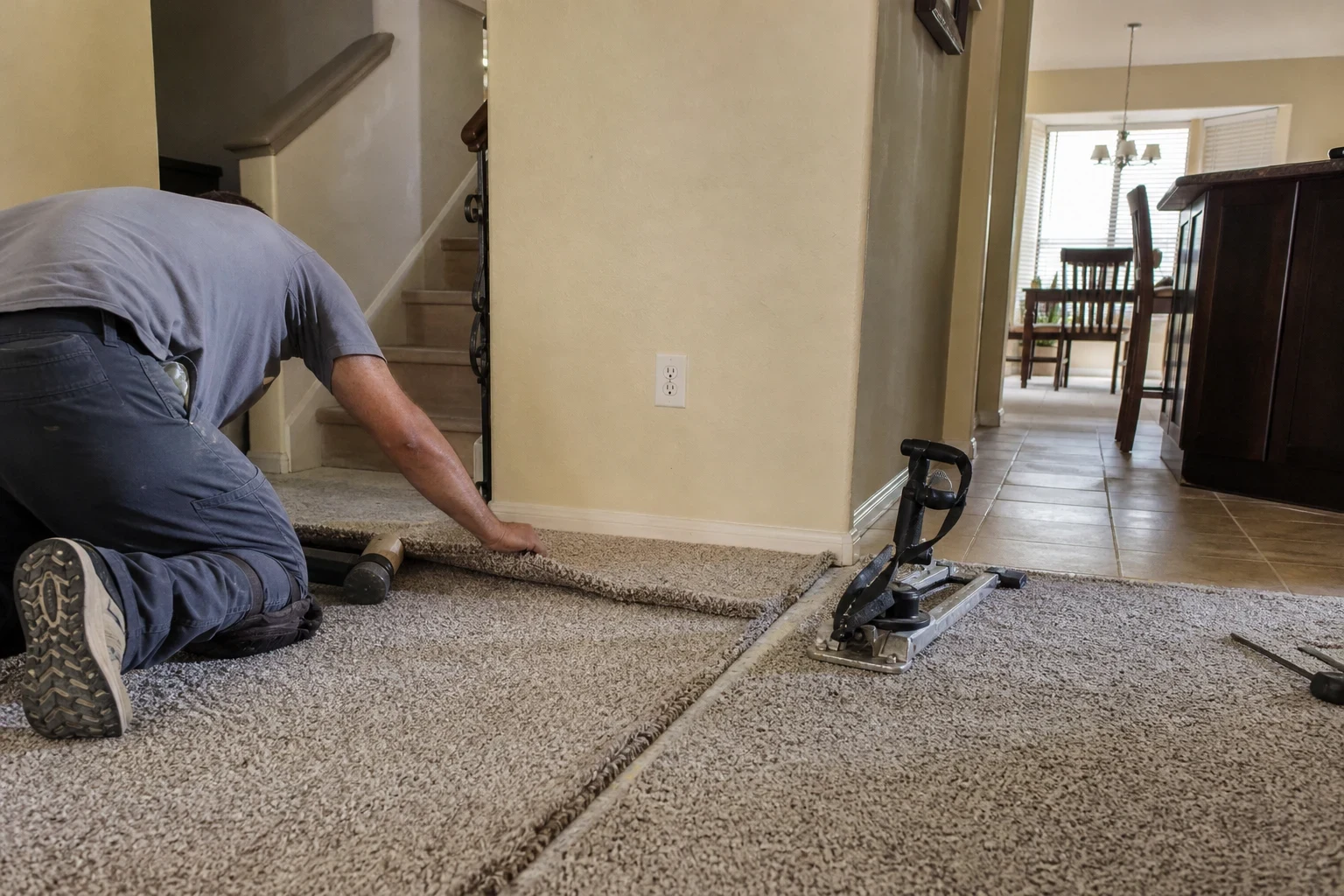
We stretch each room with a power stretcher that braces off the opposite wall, and use a knee kicker only for edges and closets. This is the step that keeps ripples from appearing a year later.
Seams placed with care
Carpet comes in 12-foot rolls, so wider rooms need a seam. We join seams with hot-melt tape and plan them out of main walkways and away from the glare of windows, where they show most.
Transitions and trim
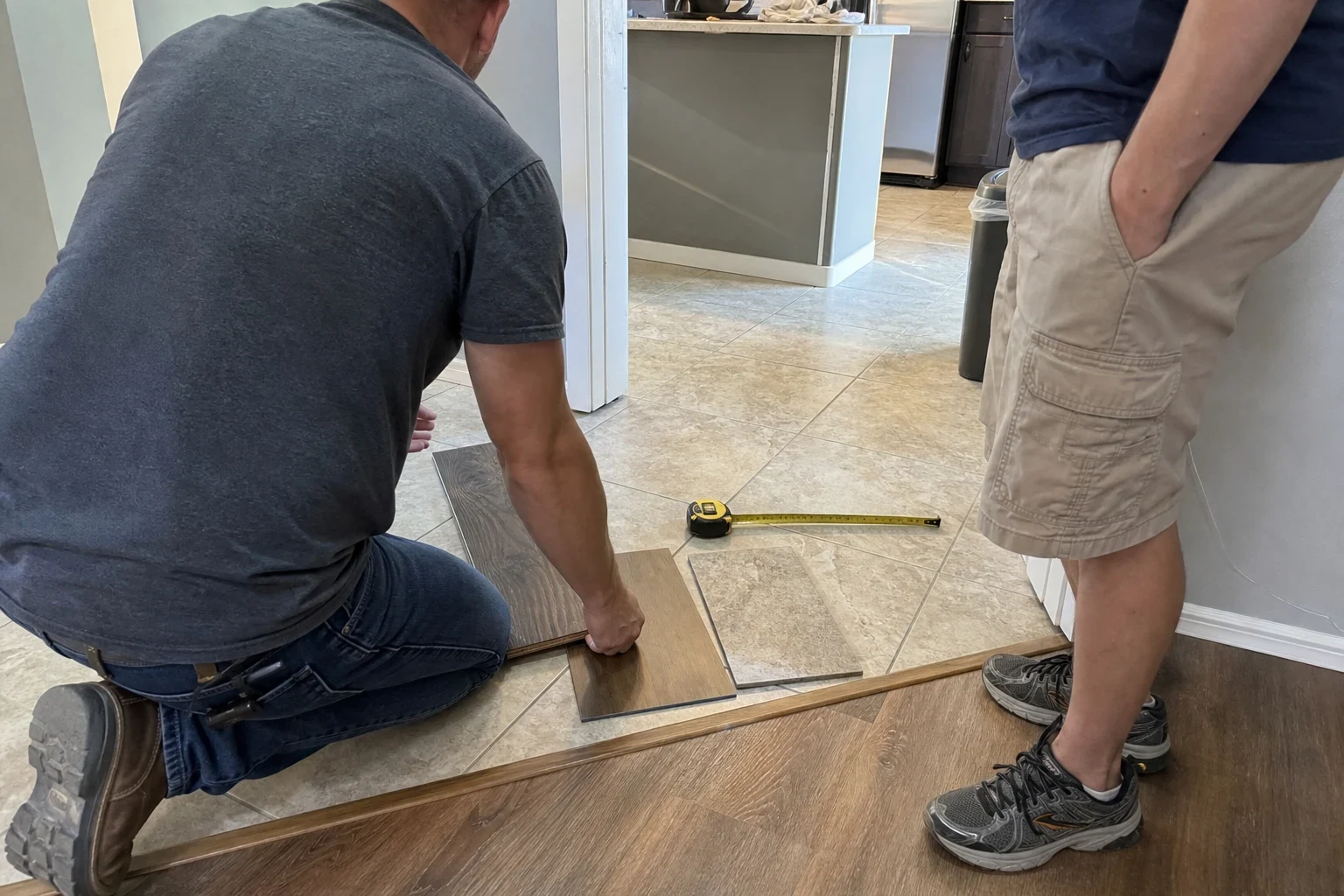
Where carpet meets tile, hardwood or vinyl plank, we install a metal edge or tuck it into a Z-bar for a clean, secure stop. Doors that drag on the new height can be trimmed.
Signs Your Carpet Is Due for Replacement
- Ripples that come back
- Wrinkles mean the carpet has stretched or the pad has broken down. A restretch helps for a while, but if the pad is crumbling it keeps coming back.
- Matted traffic lanes
- When pile in hallways and in front of the sofa stays flat after vacuuming, the fiber has lost its twist. Cleaning will not bring it back.
- Odors from below
- Pet accidents and spills soak through to the pad and the slab beneath. If the smell returns after a deep cleaning, the source is under the carpet.
- Seams pulling apart
- An open seam or a frayed edge at a doorway usually means failed seam tape or a loose stretch. Left alone, the pile keeps unraveling.
- A pad you can feel through
- If the floor feels hard or crunchy underfoot, the foam has compressed or dried out and no longer protects the carpet backing.
How Your Carpet Job Runs
- 1
Measure and choose
We measure each room and plan where the rolls run and where seams land, since roll layout drives how much carpet you buy. Then we walk you through fiber, pile style and pad options for each space.
- 2
Clear and tear out
On install day we remove the old carpet and pad, pull staples and old strip, and sweep the subfloor. We check the slab or plywood for damage and moisture before anything new goes down.
- 3
Strip, pad and stretch
New tack strip goes in, the pad is laid and stapled or glued at the seams, and the carpet is rough-cut, seamed and power-stretched wall to wall.
- 4
Trim, finish and clean up
We trim and tuck the edges, set transitions, vacuum the new carpet and haul off the scraps. Most homes are walkable the same day.
What Moves the Price of Carpet Installation
Carpet is priced by the square yard, but the number you pay reflects more than the carpet itself. Here are the parts that move the total, so the quote you get by phone and in person makes sense line by line.
- Room shape and roll layout
- Because carpet comes in 12-foot widths, a 13-foot room uses more material than a 12-foot one. Odd angles and closets add waste too.
- Fiber and construction
- Nylon usually costs more than polyester, and denser carpet with a higher face weight costs more than a light one. Wool sits at the top of the range.
- Pad choice
- Higher-density rebond, memory foam and moisture-barrier pads cost more than basic foam, and they are where the extra life of the carpet comes from.
- Removal and prep
- Tearing out old carpet, grinding down high spots on a slab or replacing damaged subfloor adds labor before the new carpet goes in.
- Stairs and furniture
- Stairs are cut and fit one tread at a time, so they take more labor per yard. Rooms full of heavy furniture add time to the job as well.
Carpet Installation Questions
- Should I pick nylon or polyester carpet?
- For hallways, family rooms and stairs, we usually suggest nylon because it springs back after being stepped on. Polyester is a good value in bedrooms and guest rooms where traffic is light. Triexta is worth a look if stains are your main concern, such as with kids or pets.
- Do I really need new pad with new carpet?
- Yes. Old pad has already compressed and often holds odors or moisture. Most carpet makers also require a pad that meets their density and thickness specs, and a worn pad shortens the life of new carpet quickly.
- How long does a carpet installation take?
- A few bedrooms or a living area usually takes one day, including removal of the old carpet. Larger homes, stairs or subfloor repairs can stretch it to two days. We will give you a realistic schedule when we measure.
- What happens if the carpet ripples after you install it?
- Our carpet work is covered by a 1-year workmanship warranty on all installations, and ripples from a loose stretch fall under workmanship. We come back and restretch it. Power stretching at install is how we keep that from happening in the first place.
- Who are we letting into our home?
- Flooring La Porte has been in business 25+ years, and we are insured. Our installers handle the tear-out, install and cleanup themselves, and we will explain each step before we start.
Pick the Right Carpet Before It Goes Down
Tell us which rooms you are carpeting and how they get used, and we will explain which fiber and pad fit. If carpet is not the best match, we can talk through laminate flooring or luxury vinyl plank instead.