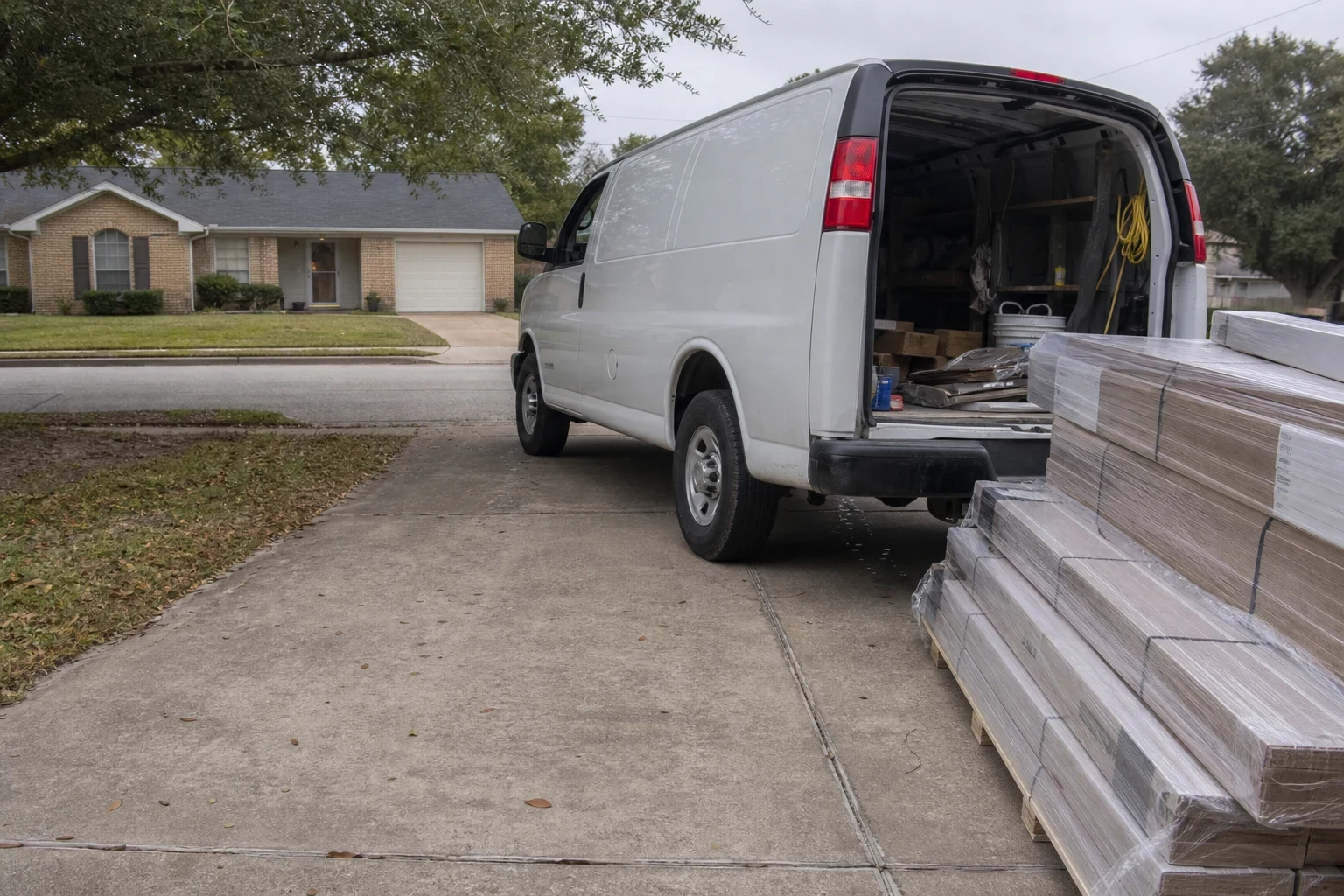
Flooring Installation in La Porte and the Towns Nearby
We install hardwood, luxury vinyl plank, tile, laminate, carpet and stair flooring in homes across La Porte and the surrounding area. Before any job, we walk you through how each material handles moisture, foot traffic and the slab under your home, so the floor you pick is the one that lasts.
Where Our Crews Work
Most of our installs happen in La Porte, Deer Park, Pasadena, Baytown and Channelview. These are often slab-built homes where the first question is moisture, not color. We test the concrete, check it for flatness and then lay out which materials fit: luxury vinyl plank or luxury vinyl tile for kitchens and baths, porcelain tile where water is a daily fact, and engineered hardwood when you want real wood over concrete.
We also work south toward the water in Seabrook, Kemah, Nassau Bay, El Lago, Taylor Lake Village and League City. Homes there range from older ranch houses to newer two-story builds with carpeted stairs and upstairs bedrooms. The same process applies everywhere: we measure, inspect the subfloor and explain the trade-offs of each option before you choose.
Towns we cover from La Porte
- La Porte
- Deer Park
- Pasadena
- Baytown
- Channelview
- Seabrook
- Nassau Bay
- Taylor Lake Village
- El Lago
- Kemah
- League City
Not on the list? Call (346) 248-3976 and ask.
What Shapes Floor Choices Across the Area
Humidity and moisture
Air along the upper Gulf Coast stays humid for much of the year, and wood fibers swell and shrink with it. Solid hardwood needs time to acclimate and room to move at the walls. Engineered hardwood, with its cross-ply core, moves less. Rigid-core vinyl barely reacts at all, which is why we often suggest it for rooms near exterior doors.
Slab foundations
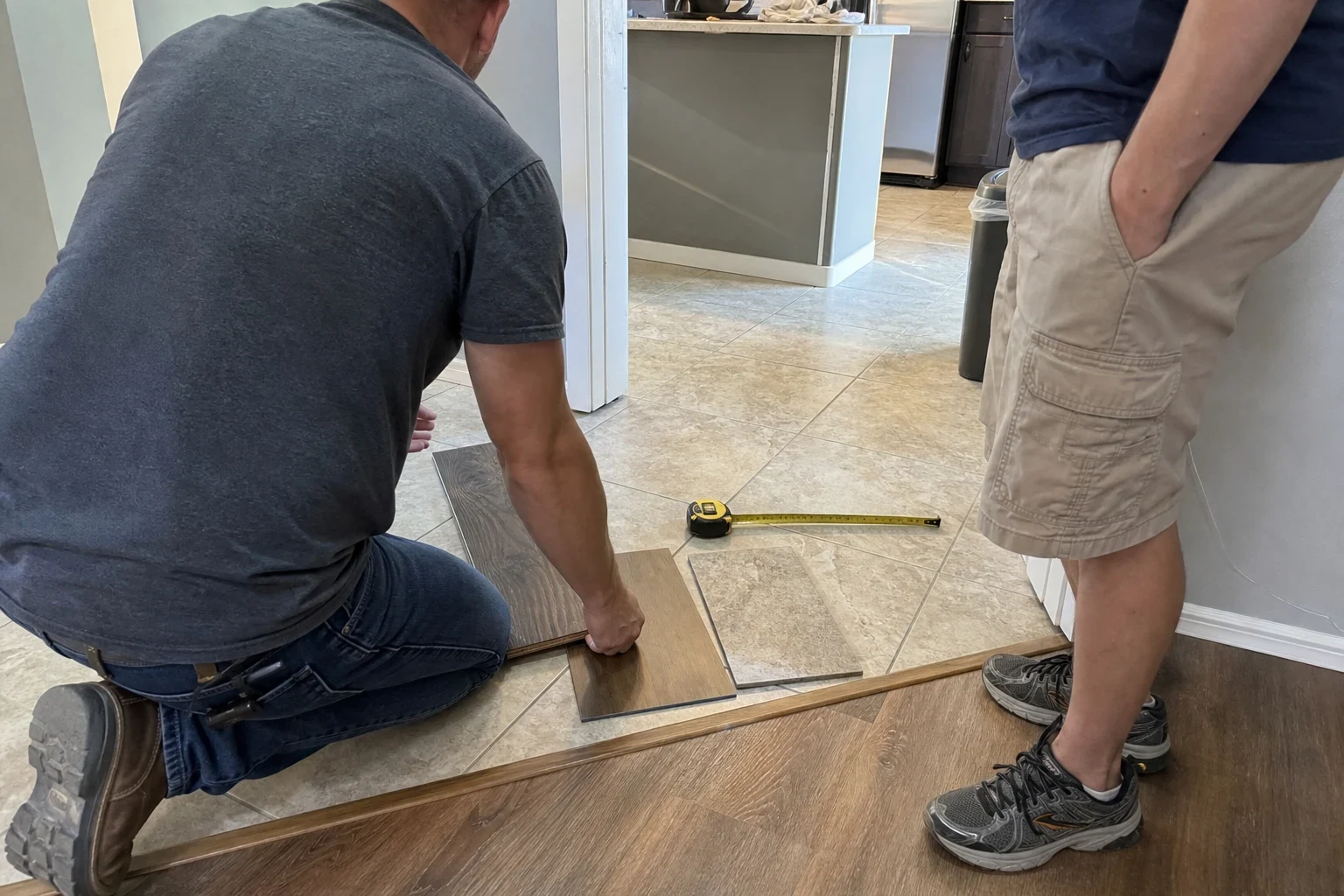
A large share of homes in the region sit on concrete slabs. Slabs can wick moisture up from the ground, so we test before installing and use a vapor barrier or moisture-rated underlayment where the reading calls for it. Low spots and ridges get ground or filled first, because a click-lock floor laid over a dip will flex and open at the seams.
Older homes and layered floors
Houses from the 1960s and 1970s sometimes hide two or three layers under the carpet, including sheet vinyl or old tile. We pull up what is there and check the substrate. Adding new flooring on top of old layers raises the floor height at doorways and can trap problems underneath.
HOA rules and permits
Replacing a floor inside a single-family home usually does not need a city permit, though rules vary by town and scope. Many neighborhoods and most condos have HOA guidelines, sometimes requiring sound-rated underlayment on upper floors or limiting work hours. Ask your HOA early, and we will plan the materials and schedule around what they require.
Not Sure Which Material Fits Your Home
Tell us which rooms you are redoing and what they go through day to day. We will explain how hardwood, vinyl, tile, laminate and carpet would each hold up there, then set a time to measure and check your subfloor.