ServicesLuxury Vinyl Tile
Luxury Vinyl Tile in La Porte, Matched to Your Rooms
Luxury vinyl tile gives you the look of stone or ceramic in 12x24 and 18x18 formats without cold, cracking grout lines. We explain rigid-core versus glue-down, wear layer thickness and grout options, then install over a subfloor we have checked for moisture and flatness.
What luxury vinyl tile is and when it fits
Luxury vinyl tile, or LVT, is the square and rectangular cousin of luxury vinyl plank. Each tile is a printed design layer under a clear wear layer, bonded to either a rigid stone-plastic composite (SPC) core that clicks together or a thinner flexible vinyl body that is glued to the floor. The tile format and beveled or groutable edges are what let it read as slate, travertine or porcelain instead of wood.
It is the right call for kitchens, bathrooms, laundry rooms and entries where you want a tile look but would rather skip the weight, the hardness on your knees and the grout scrubbing that come with ceramic. Most homes around here sit on concrete slabs that stay damp in the Gulf Coast humidity, and a vinyl surface does not swell the way laminate or wood can. If you want real porcelain, our tile flooring page covers that path instead.
We have been in business 25+ years and carry insurance on every job, and most LVT questions come down to two choices: which core, and which wear layer. We walk you through both before you pick a color.
What an LVT installation includes
Moisture testing on the slab
We test the concrete before ordering adhesive or underlayment. A wet slab changes the plan, usually toward a rigid core with a vapor barrier or a moisture-rated adhesive.
Flattening the subfloor
Click-lock LVT needs the floor flat to roughly 3/16 inch over 10 feet, or the locking joints flex and eventually separate. We grind high spots and fill low spots with patch or self-leveling compound.
Removing the old floor
Carpet, pad, tack strip, old vinyl or ceramic come up and get hauled away. Thinset left from tile is ground down so it does not telegraph through a thin glue-down product.
Layout from the room's center lines
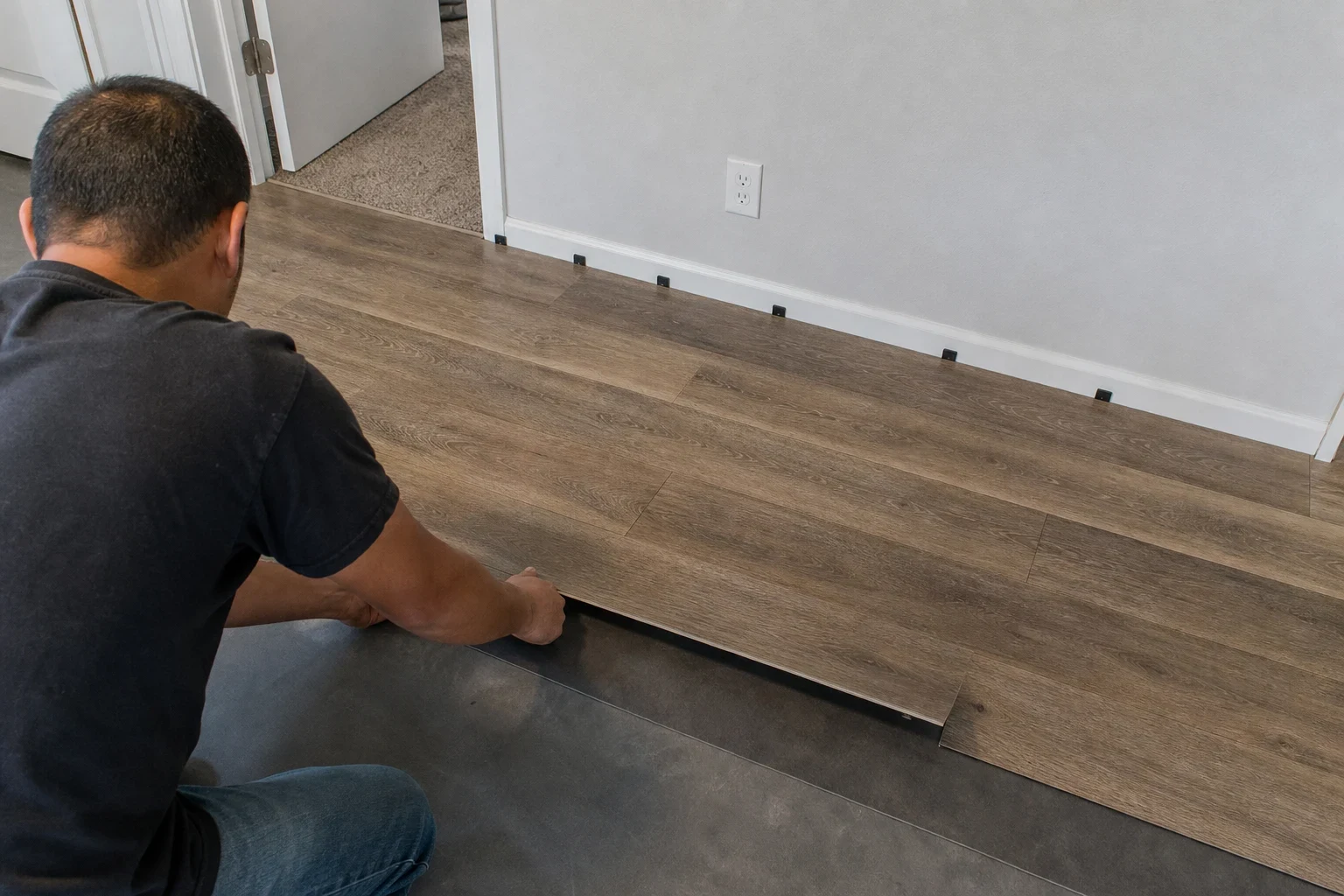
Tile formats show crooked lines far more than planks. We snap lines so cuts at doorways and walls are balanced, not a sliver on one side.
Doors, trim and transitions
We undercut door jambs so tile slides underneath, leave the expansion gap a floating floor needs, and finish with quarter round, baseboard reinstall and transition strips to carpet or wood.
Grout, if you chose groutable tile
Groutable LVT gets a flexible, stain-resistant vinyl grout in a joint of about 1/8 inch, which finishes the stone look without the cracking cement grout can show.
Signs luxury vinyl tile may suit your home
- Cracked ceramic or failing grout
- Old tile with hollow-sounding spots or crumbling grout lines often means the bond to the slab has let go. LVT can replace it without the same rigid bond that cracked.
- Sheet vinyl that is curling or stained
- Lifting seams and yellowed spots near the tub or dishwasher are a sign the old sheet goods have reached the end. LVT gives you individual tiles that can be swapped if one gets damaged.
- A cold, hard kitchen floor
- If standing at the counter hurts, a vinyl surface with an attached pad is noticeably softer and warmer than porcelain over concrete.
- Wanting a stone look without the weight
- Natural stone is heavy, porous and needs sealing. Printed LVT gives a convincing slate or marble look that only needs a damp mop.
How the job runs
- 1
The phone conversation
You tell us the rooms, what is on the floor now and how you use the space. We explain where rigid-core and glue-down each make sense and set a time to measure.
- 2
Measuring and testing
We measure each room, check the slab for moisture and flatness, and note door heights and transitions. Your quote lists removal, prep, material and trim as separate lines.
- 3
Acclimation and prep day
The cartons sit in your home at living temperature, typically 48 hours, so the tiles match the room. Then old flooring comes up and the subfloor is ground, patched or leveled.
- 4
Installation and cleanup
We lay from the snapped lines, cut around cabinets and door casings, add grout if specified and set trim. We vacuum, wipe down the floor and go over care with you before we leave.
What moves the price of luxury vinyl tile
LVT pricing is mostly material and preparation, with labor driven by how many cuts the rooms demand. We cannot give a number until we have seen the slab, but these are the items that change it most.
- Core and wear layer
- A 20 mil wear layer on a rigid SPC core costs more than a 12 mil flexible tile, and it holds up better in kitchens and under pets. We match the spec to the room instead of upselling every space.
- Subfloor condition
- A flat, dry slab needs little work. Grinding thinset, patching cracks or pouring self-leveler adds time and material.
- Removal of the old floor
- Pulling carpet is quick. Breaking up ceramic tile set in a mortar bed is the slowest and heaviest removal we do.
- Room shape and grout
- Bathrooms with toilets, vanities and many corners take more cuts per square foot than an open kitchen. Groutable tile adds a full grouting step.
Luxury vinyl tile questions
- What is the difference between LVT and luxury vinyl plank?
- The materials are the same; the format is different. Plank is long and narrow and imitates wood, while tile comes in squares and rectangles and imitates stone or ceramic. Some homeowners use plank in living areas and LVT in the kitchen and baths, which our luxury vinyl plank page covers in more detail.
- Is LVT waterproof in a bathroom?
- The tile itself does not absorb water, and rigid-core products resist spills sitting on the surface. Water can still get under a floor at the edges, so we seal around tubs and toilets with a flexible caulk. Standing water from a leak should still be dried quickly.
- Rigid-core or glue-down: which should I choose?
- Rigid-core clicks together, floats over the slab and hides small imperfections better. Glue-down is thinner, handles heavy furniture and kitchen islands without movement and is easier to replace one tile at a time. We recommend one after seeing the room and the slab.
- Can you install LVT over my existing tile?
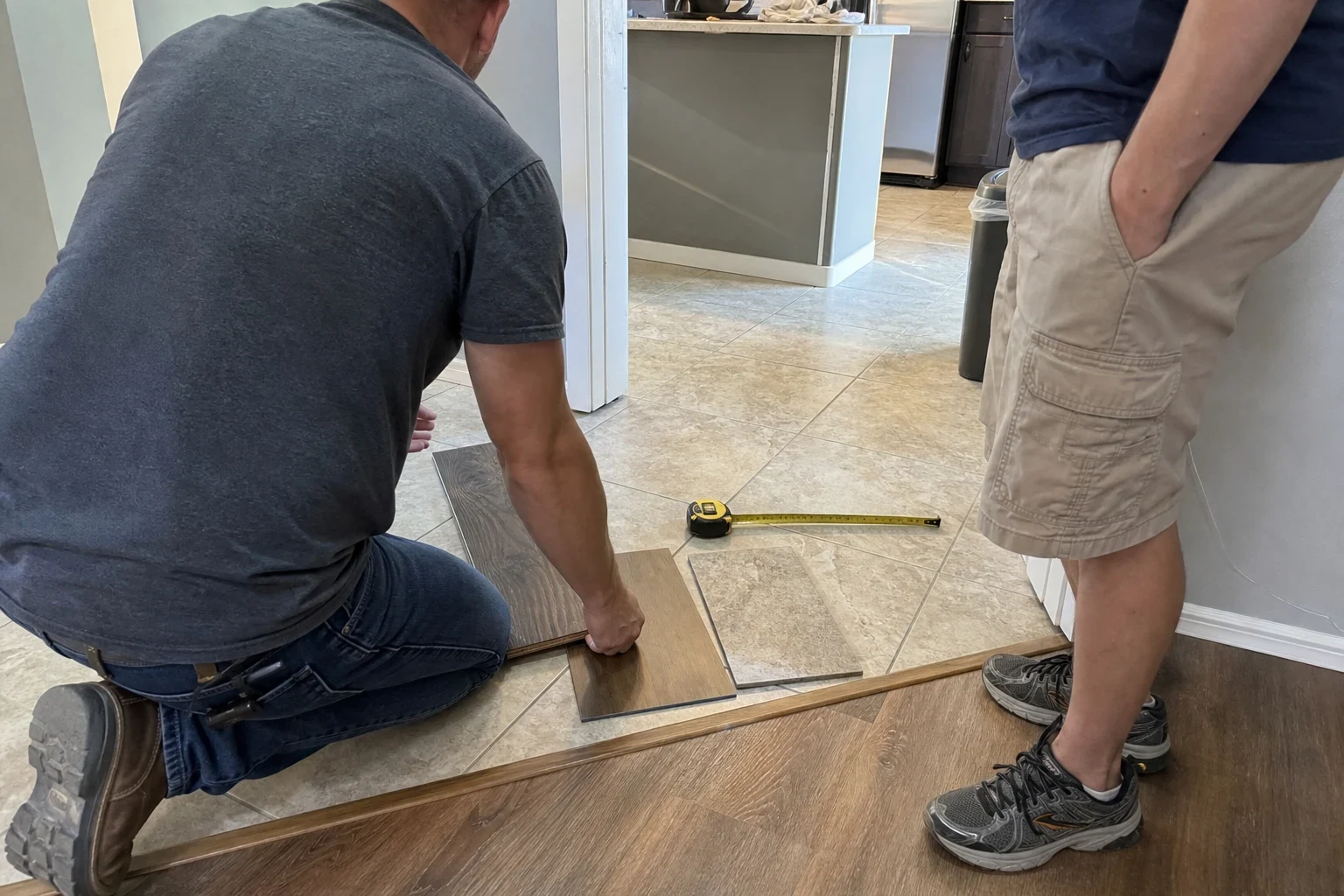
- Sometimes. If the old tile is solidly bonded and flat, we can float a rigid core over it after filling the grout lines. Loose or cracked tile has to come up first, or the problem moves into the new floor.
- What happens if something goes wrong after the install?
- Our 1-year workmanship warranty applies to all installations, LVT included. If a locking joint separates or a transition strip lifts because of how we put it down, that is ours to fix. Defects in the tile itself fall under the product maker's own terms.
Pick the right tile before you pick the color
Tell us which rooms you are thinking about and what is on the floor now. We will talk through core types, wear layers and grout so you know what you are choosing.