ServicesTile Flooring
Tile Flooring in La Porte
Porcelain, ceramic and natural stone each behave differently underfoot, around water and over a slab that shifts. We explain those differences before you choose, then handle the flattening and crack prep that decides whether the new tile in your home stays tight.
When tile is the right floor
Tile is the floor to choose where water, heavy traffic or pets would wear out softer materials. Kitchens, bathrooms, laundry rooms and entries are the usual spots. Porcelain absorbs 0.5 percent of its weight in water or less, so it shrugs off spills and mopping. Glazed ceramic is lighter, easier to cut and fine for most indoor rooms. Natural stone like travertine or slate looks like nothing else but needs sealing and a stiffer base.
The trade-off is that tile cannot flex. If the floor under it bends or cracks, the tile or grout cracks with it. Most homes around here sit on concrete slabs over clay soil that swells when wet and shrinks in drought, so slab cracks are common. That is why most of a tile job happens before the first piece goes down.
We have been in business 25+ years, long enough to see which installs hold up and which ones fail at year three. If tile turns out to be the wrong fit for a room, we will say so and walk you through luxury vinyl tile or luxury vinyl plank instead.
What a tile installation includes
Removal of the old floor
We pull up carpet, vinyl or old tile and grind off leftover thinset or adhesive. A clean, bare slab is the only surface new mortar grips properly.
Flattening and crack isolation
We check flatness with a straightedge and fill low spots with self-leveling compound. Over slab cracks we apply a crack isolation or uncoupling membrane, which lets the concrete shift slightly without telegraphing the crack into the tile.
Wood subfloor reinforcement
On a second floor or pier-and-beam section, we confirm the joists and plywood are stiff enough for tile, then screw down cement backer board or a membrane. Stone needs roughly twice the stiffness of porcelain.
Setting with full mortar coverage
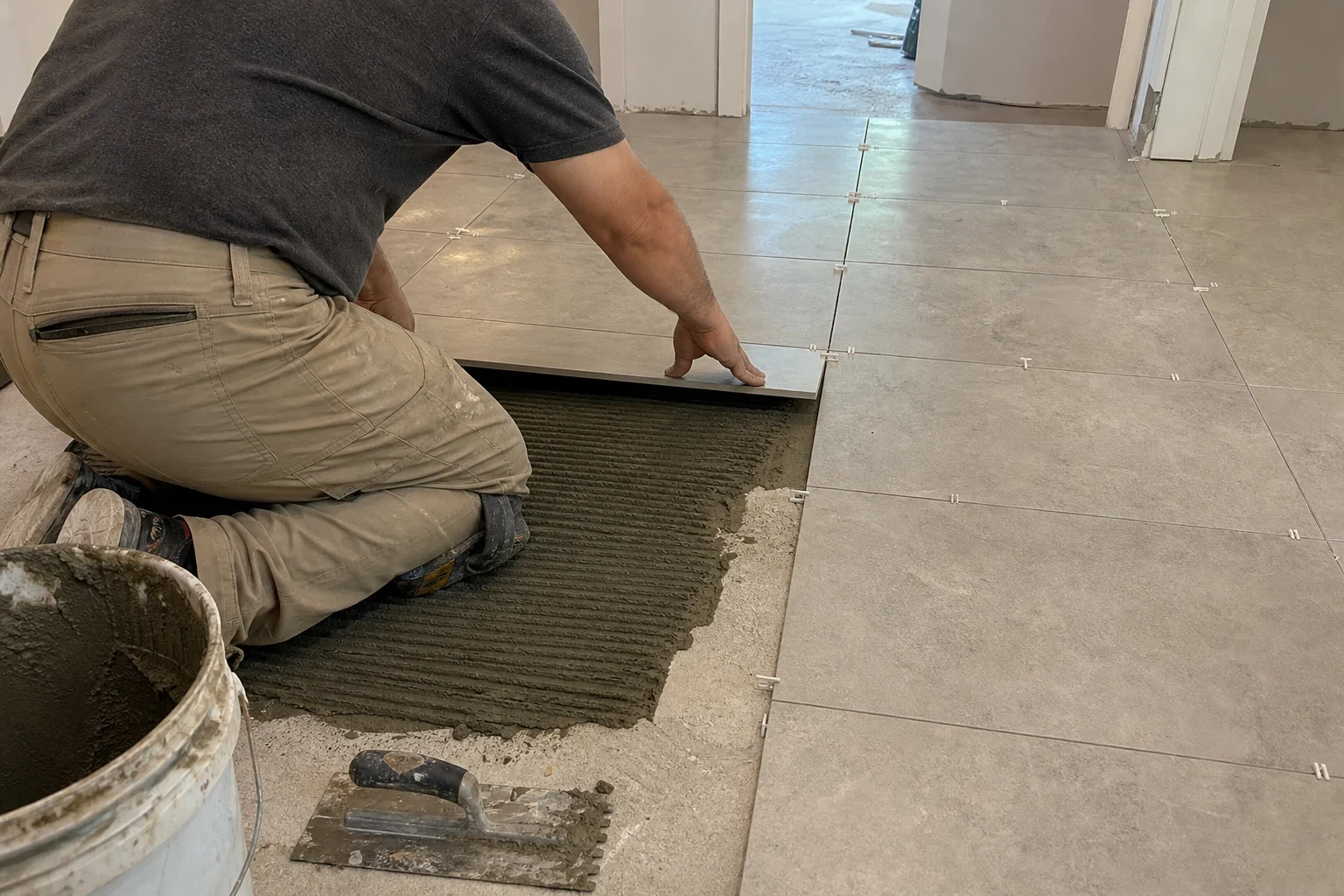
We use the thinset the tile maker specifies, the correct notched trowel, and back-butter large-format tile. Hollow spots under a tile are where cracks start, so we pull pieces during the job to check coverage.
Grout, movement joints and trim
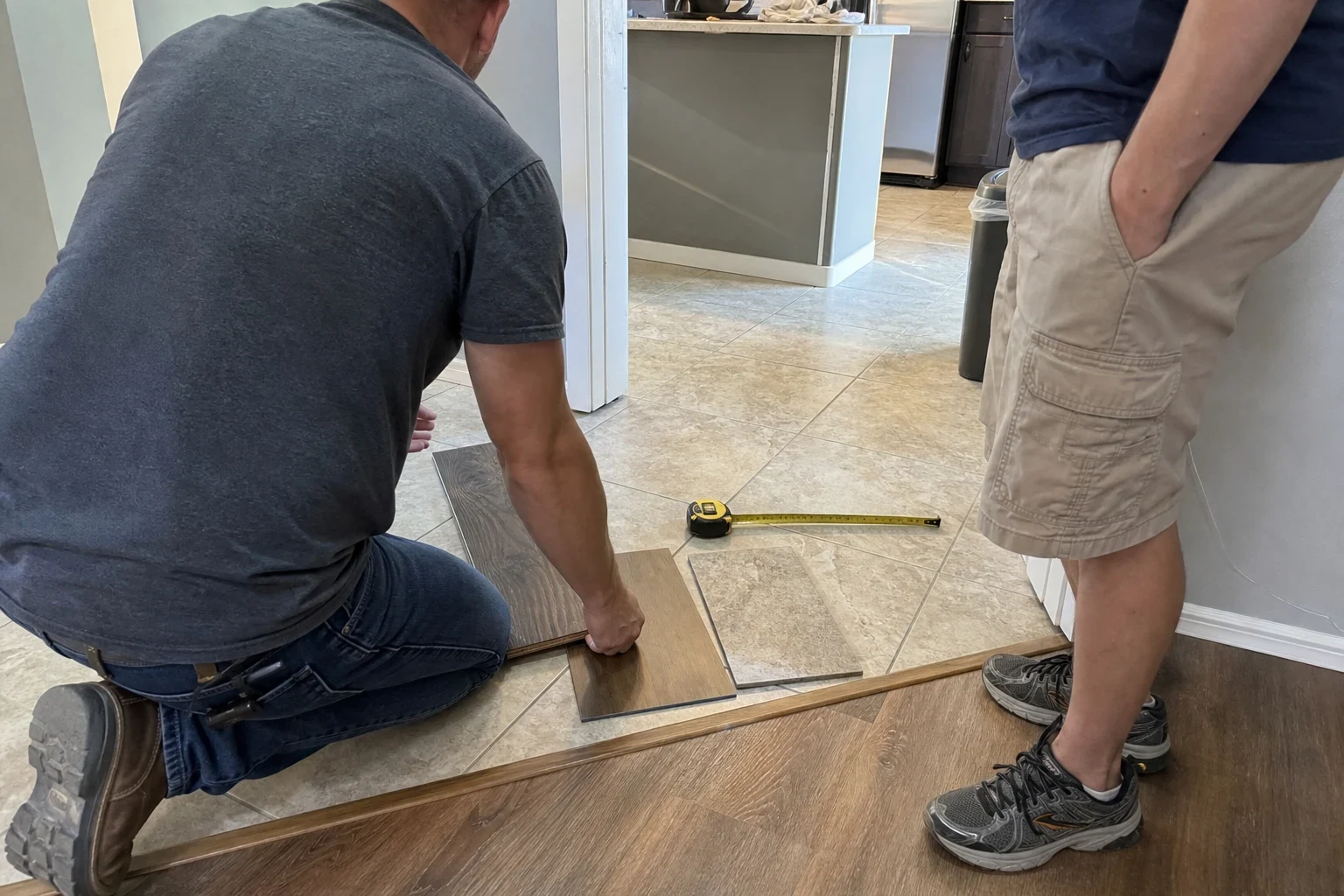
We leave a gap at the walls, add soft joints in large rooms, and finish transitions to carpet or wood with the right profile. You choose cement grout or epoxy grout after we explain how each wears.
Signs your tile floor needs replacing
- A crack running across several tiles
- A straight crack that crosses tile after tile usually follows a crack in the slab below. Replacing single tiles will not stop it; the new floor needs a membrane over that line.
- Hollow sound when you tap
- Tap with a coin or a broom handle. A hollow click means the tile has come loose from its mortar or never had full coverage, and it will crack under load.
- Grout crumbling or pulling away
- Loose grout lets water reach the substrate and is often a sign that the tiles are moving. In a bathroom, it can also mean moisture is getting under the floor.
- Tenting or raised edges
- Tiles that lift into a peak usually had no room to expand at the walls. Once they pop, they rarely lie flat again.
- Worn glaze in walk paths
- Low-grade ceramic can wear through its glaze at doorways and in front of the sink. Porcelain with color through the body hides wear much better.
How the job runs
- 1
Look at the room and the slab
We measure, check for cracks and moisture, and lay a straightedge across the floor. Then we go over tile types, sizes and grout with you, including what large-format tile demands in flatness.
- 2
Protect the rest of your home
We cover adjacent floors, seal doorways against dust, and keep the work area contained. We are insured, and we treat your furniture and walls as if they were our own.
- 3
Demolition and prep
Old flooring comes out, the slab gets ground and leveled, and membranes go down. This is often the loudest and longest part of the job.
- 4
Lay out and set
We dry-lay a line so cut pieces at the walls are not slivers, then set tile with leveling clips where needed to control lippage. Thinset cures before grouting.
- 5
Grout, clean and walk-through
We grout, clean haze off the face, and seal stone or cement grout if needed. You walk the floor with us before we leave, and we tell you when it is ready for furniture.
What affects the cost of tile flooring
The tile in the box is rarely the biggest line on a tile job. Slab condition, removal of the old floor and the layout you pick usually move the total further. We go over each line of the quote with you, by phone or at your home, before anything gets torn up.
- Tile size and material
- Large-format porcelain needs a flatter base and more labor to set. Natural stone costs more to cut and needs sealing.
- Condition of the slab or subfloor
- Grinding, self-leveling and crack membranes add time and material. A badly out-of-level slab can be the biggest variable on the job.
- Removal of existing flooring
- Pulling carpet is quick. Breaking up old tile set in a thick mortar bed takes much longer and creates more debris to haul away.
- Layout and pattern
- A straight lay is the simplest. Diagonal, herringbone and offset patterns create more cuts and more waste.
Tile flooring questions
- Should I pick porcelain or ceramic?
- For kitchens, bathrooms and entries, porcelain is usually the better choice because it is denser and absorbs very little water. Ceramic works well in lower-traffic rooms and costs less to cut and set. We can show you how to tell which one a box actually contains from its rating and water absorption.
- Can you tile over my existing tile?
- Sometimes, if the old tile is flat, stuck down solidly with no hollow spots, and the added height does not cause door or transition problems. In most cases we remove it, because a loose or cracked layer underneath will pass its problems straight to the new floor.
- Will tile crack if my slab shifts?
- Tile set directly on a moving slab often will. A crack isolation or uncoupling membrane absorbs small movement, and soft joints at the walls and in large rooms give the floor room to expand. Those two steps prevent most of the cracking we see in older installs.
- How long until I can walk on it?
- Light foot traffic is usually fine about a day after grouting. Heavy furniture and appliances should wait a little longer, depending on the thinset and grout used. We will give you the exact timing for your materials.
- Is the installation covered by a warranty?
- Yes. Every tile installation we do carries a 1-year workmanship warranty on our work. We go over what that covers with you before the job starts, so there are no questions later.
Get the right tile for each room
Tell us about the room, what is on the floor now and how you use it. We will explain which tile fits, what prep the floor needs, and how the job would run in your home.