ServicesLaminate Flooring
Laminate Flooring in La Porte
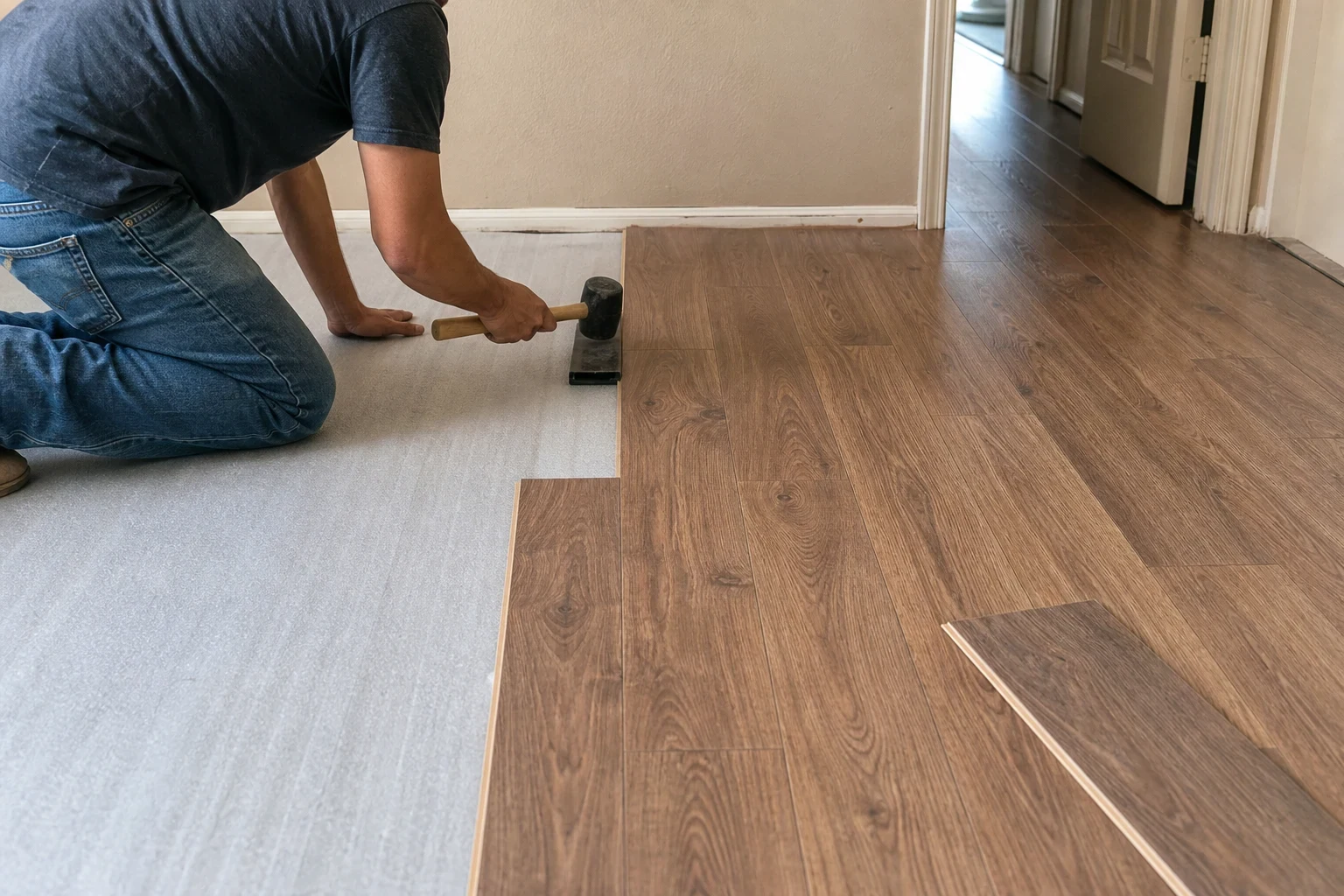
Laminate gives you a wood look over a dense fiberboard core at a lower cost than solid hardwood. We help you pick the wear rating and underlayment that fit your rooms, then install it flat and gapped so it stays put through humid summers.
What laminate is and when it makes sense
Laminate is a layered plank. A melamine wear layer with aluminum oxide sits over a printed photo layer, a high-density fiberboard (HDF) core and a backing sheet that balances the board. The planks click together and float over an underlayment, so nothing is glued or nailed to your subfloor.
It is a strong pick for living rooms, bedrooms and hallways where you want a hard surface that resists scratches from pets and chair legs. The trade-off is water. Standard HDF swells if liquid sits in the seams, so for kitchens and laundry rooms we steer you toward water-resistant laminate with sealed edges, or toward luxury vinyl plank if the room sees standing water.
With 25+ years in business, we have seen which products hold their edges on the slab foundations common around here and which ones tent up after the first wet season. We explain those differences before you choose.
What a laminate install includes
- 01
Moisture testing on concrete
We meter the slab before anything goes down. Concrete pushes vapor upward, and laminate over a damp slab will cup at the seams.
- 02
Vapor barrier and underlayment
Over concrete we lay a 6-mil polyethylene barrier or a combination underlayment that includes one. Foam or cork underlayment also softens footfall noise, which matters in two-story homes.
- 03
Floor flattening
Locking joints only hold when the base is close to flat, and most manufacturers allow very little variation across a long straightedge. Where the slab rises, we take it down with a grinder. Where it dips, we build it up with cementitious patch, so the tongues and grooves are not carrying strain.
- 04
Expansion gaps and trim
We leave a gap at every wall, cabinet and door frame so the floor can move with the seasons, then cover it with baseboard or quarter round.
- 05
Door jambs and transitions
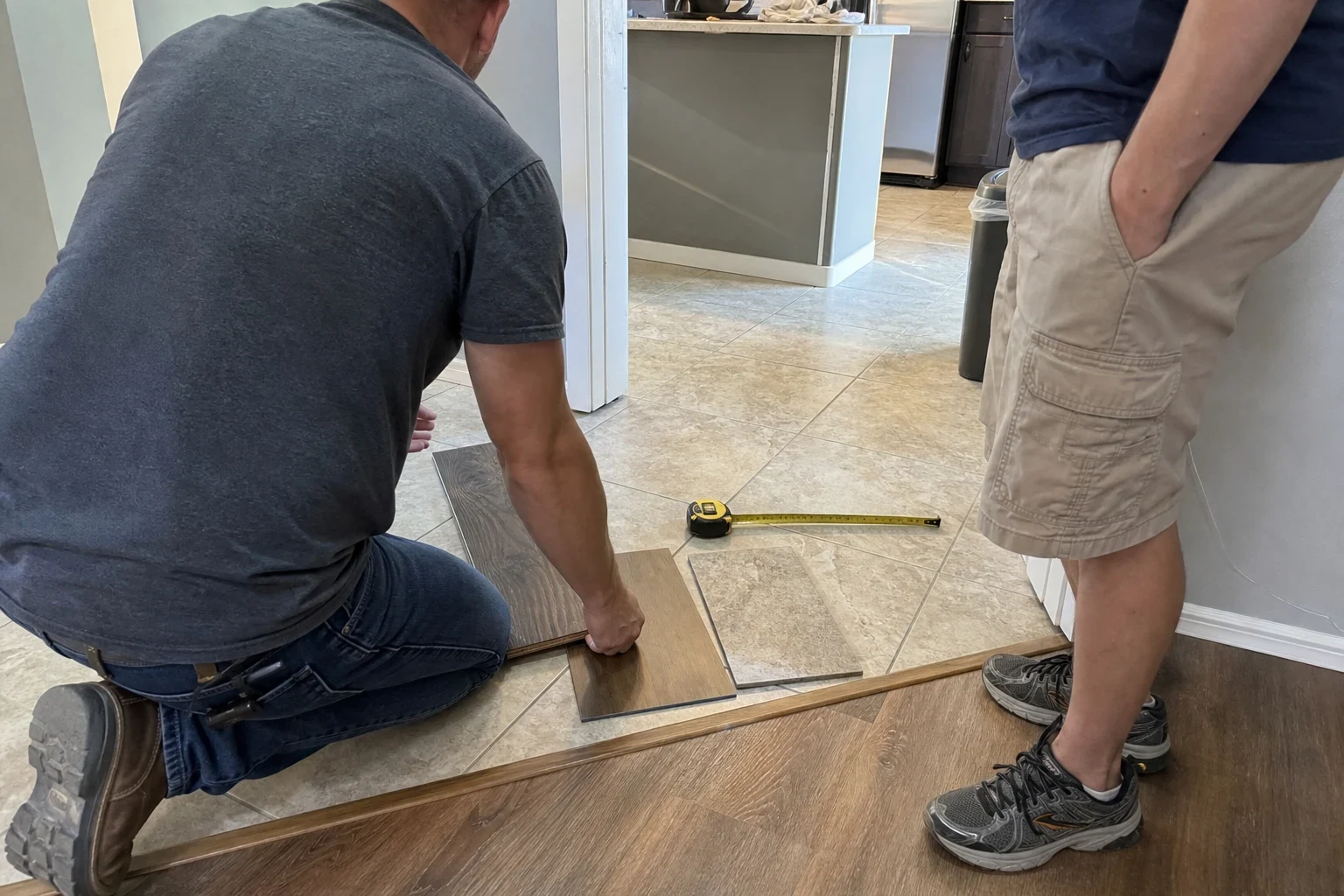
We undercut door casings so planks slide beneath them, and fit T-moldings or reducers where laminate meets tile or carpet.
Questions about Laminate Flooring?
Call(346) 248-3976Signs it is time for new laminate
Swollen or chipped edges
Raised plank edges mean water got into the HDF core. Fiberboard does not shrink back once it swells, so the damaged boards need replacing.
Peaking at doorways
Boards that tent upward at a threshold were usually installed without enough expansion gap, or pinned by trim nailed through the floor.
Hollow or bouncy spots
A drumming sound or flex underfoot points to an uneven subfloor below. Over time those spots break the locking tongues.
Worn carpet you are tired of cleaning
If carpet holds pet hair and stains, laminate gives you a hard surface that sweeps clean without the cost of hardwood.
Faded or scratched wear layer
Once the top coat wears through to the print, the look is gone and the core is exposed to moisture.
How the job runs
- 1
Measure and choose
We measure each room, check the subfloor and walk you through AC ratings, thickness and edge treatment so you know what you are buying.
- 2
Acclimate the planks
Boxes sit flat in your home for about 48 hours so the core adjusts to indoor temperature and humidity before cutting.
- 3
Prep and lay
We remove the old floor, flatten the base and roll out the barrier and underlayment. Rows are staggered so end joints do not line up, which keeps the floor strong.
- 4
Trim, clean and walk through
We set trim and transitions, rehang doors and clean up. Then we walk the floor with you and explain how to care for it.
What moves the price of laminate
Laminate cost depends on more than the plank itself. Prep, removal and the shape of your rooms often matter as much as the product. We go through each item with you by phone and in person so you see where the money goes.
- Plank grade
- Thicker boards, higher AC ratings and water-resistant cores cost more than basic 7mm product but last longer in busy rooms.
- Old floor removal
- Pulling carpet is quick. Removing glued tile or old vinyl takes more labor and disposal.
- Subfloor condition
- A slab with dips or cracks needs grinding and patch before laminate can lock together flat.
- Room layout
- Closets, angled walls and many doorways add cuts, trim and transition pieces.
- Stairs
- Laminate on steps needs stair nose pieces and careful fitting. Our stair flooring page covers that work.
Laminate questions we hear often
Can laminate go in my kitchen or bathroom?
Water-resistant laminate with sealed edges handles spills in a kitchen if you wipe them up. In full bathrooms, where water pools around tubs and toilets, we usually recommend luxury vinyl plank or tile flooring instead.
What AC rating do I need?
AC3 suits most homes, including living areas with normal traffic. AC4 is a good step up for entryways, homes with large dogs or busy families. Higher than that is mostly meant for commercial floors.
Will laminate sound hollow?
Floating floors can sound clicky if the underlayment is thin. A denser foam or cork underlayment and a flat subfloor cut that sound noticeably.
Is laminate the same as luxury vinyl plank?
No. Laminate has a wood fiber core, so it is stiffer and more scratch resistant but less tolerant of water. Luxury vinyl plank has a plastic or stone composite core that does not swell when wet.
Is your work covered after the install?
Yes. We carry a 1-year workmanship warranty on all installations, and we are insured while working in your home.
Pick the right laminate for your rooms
Tell us which rooms you want covered and what they see day to day. We will explain the plank grades that fit and what your subfloor needs.