ServicesHardwood Flooring
Hardwood Flooring in La Porte
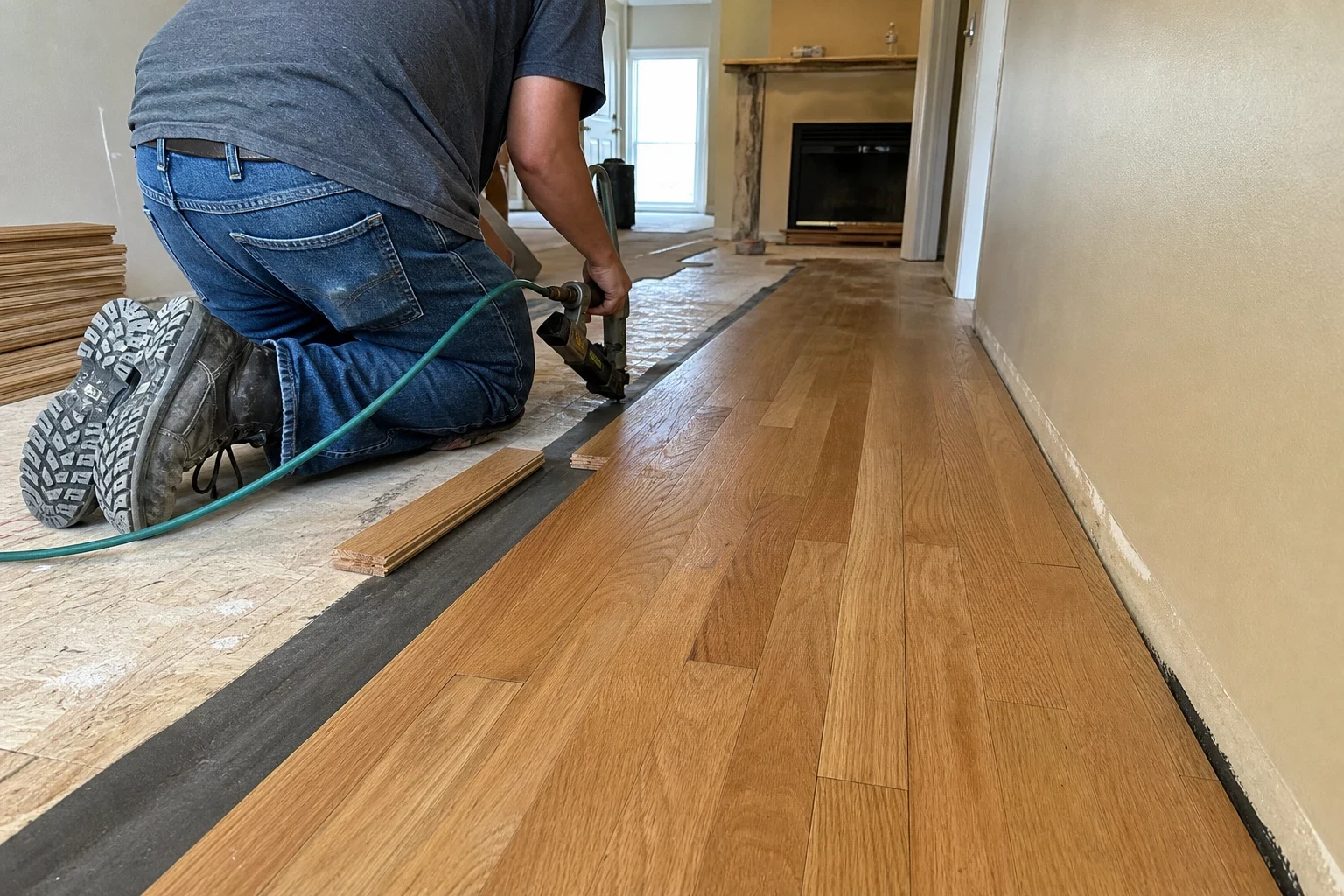
We install solid and engineered hardwood and help you pick the right construction for what is underneath it. A concrete slab and a plywood deck call for different boards and different fastening, and we explain why before you choose a species or a color.
Solid or Engineered: Start With What Is Underneath
Solid hardwood is one piece of wood, usually 3/4 inch thick, and it is meant to be nailed into a wood subfloor. Engineered hardwood has a real wood wear layer bonded over a cross-ply core. That core resists the swelling and shrinking that make solid boards cup or gap, so engineered planks can be glued directly to concrete or floated over a pad.
Many homes around La Porte, Deer Park and Seabrook sit on slab foundations, and Gulf Coast humidity keeps moisture moving through that concrete. For most slab homes, engineered hardwood is the sound choice. Where you have a raised wood subfloor, solid oak or hickory is on the table.
We have been in business 25+ years, and that is the conversation we start every hardwood job with. Species, width and finish come after the construction is settled.
What Our Hardwood Installation Covers
- 01
Moisture testing before anything is ordered
We test the slab or subfloor and record the readings. If moisture is above what the flooring manufacturer allows, we tell you and plan a vapor barrier or moisture-blocking adhesive instead of hoping it works out.
- 02
Removal of the old floor
Carpet, pad, tack strip, vinyl or old wood comes up and goes out. We scrape adhesive residue so the new floor bonds to clean concrete or sound plywood.
- 03
Leveling the subfloor
Manufacturers set a flatness tolerance, commonly 3/16 inch across a 10-foot span. Humps in the slab get ground down and dips get troweled full of cement patch. That keeps planks sitting tight, without rocking, clicking or separating at the seams.
- 04
The right fastening method
Nail-down for solid wood over plywood, full-spread urethane adhesive for engineered over slab, or a floating install over underlayment where that suits the product. We follow the manufacturer's instructions for the boards you chose.
- 05
Expansion gaps, door jambs and trim
We leave the expansion gap the manufacturer specifies at every wall, undercut door jambs so the boards slide under cleanly, and finish edges with baseboard or quarter round and matching transitions.
- 06
Coverage during the job and after it
We are insured while we work in your home. Every installation also carries our 1-year workmanship warranty.
Questions about Hardwood Flooring?
Call(346) 248-3976Warning Signs Your Current Floor Needs Replacing
Boards with raised edges or a humped center
Cupping, where the edges sit above the middle, or crowning, the opposite, usually traces back to moisture rising from below or a past leak. After the source is fixed, wood that has permanently changed shape is usually best replaced.
Hollow or loose spots
A drumming sound underfoot on a glued floor means the adhesive has let go. Boards that move will keep wearing at the edges until they are reset or replaced.
Boards you cannot match
Water or pet damage in one room, with no matching stock available, often makes a new floor across the connected rooms look better than a patch.
Worn carpet in main rooms
Matted traffic lanes and stains that come back after cleaning are a good time to move to wood, which sweeps clean and does not hold dust and dander.
How a Hardwood Job Runs
- 1
In-home visit and readings
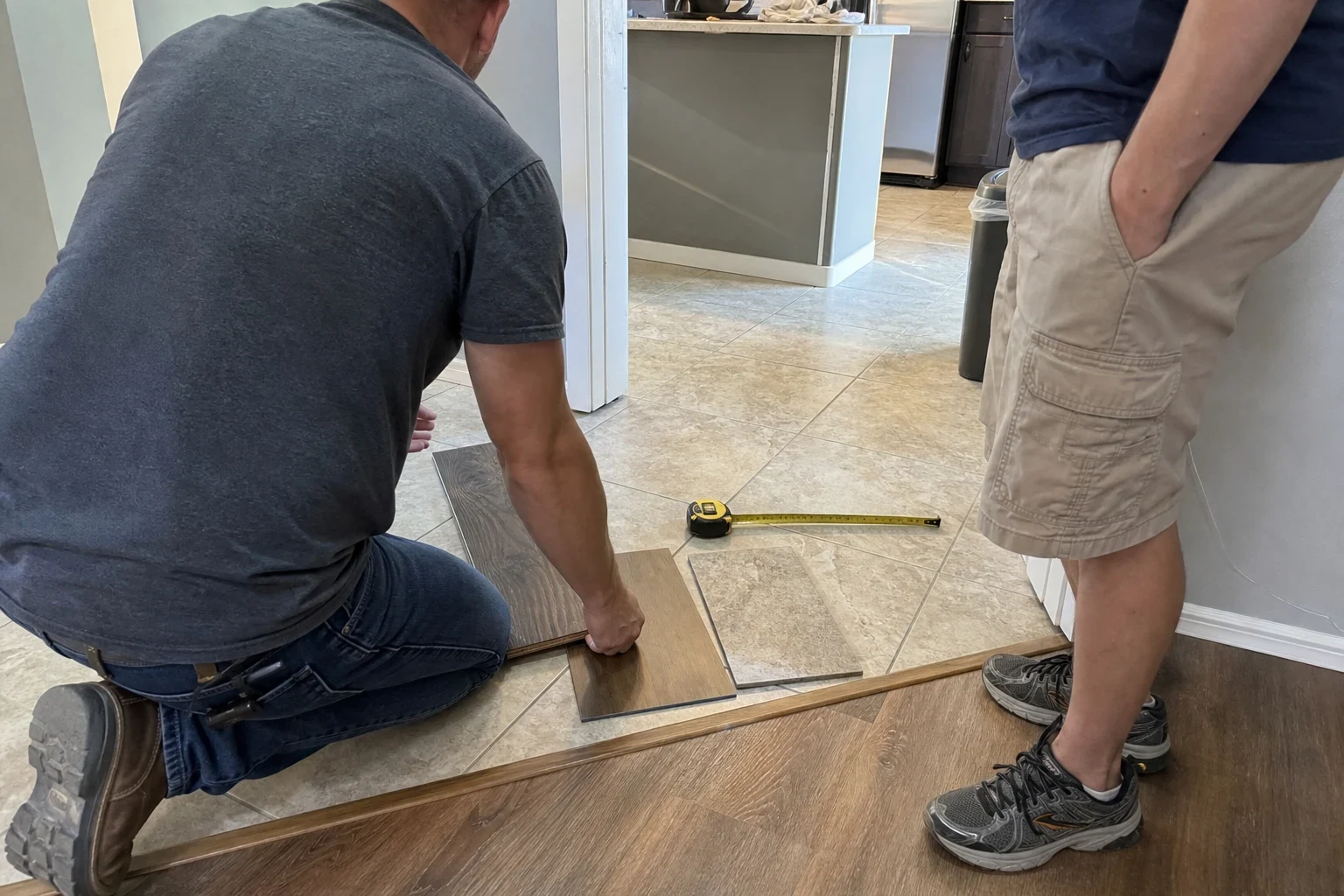
We measure the rooms, check the subfloor and take moisture readings. You see samples of the species and constructions that fit your floor, and we explain the trade-offs of each.
- 2
Delivery and acclimation
The wood is delivered and left in your home with the air conditioning running, for the time the manufacturer specifies. This lets the boards settle to your indoor humidity before they are cut.
- 3
Prep and installation
We remove the old floor, flatten the subfloor and lay the boards with staggered end joints, racking from several boxes so color and grain mix evenly. Furniture moving and dust control are planned with you ahead of time.
- 4
Trim, cleanup and walkthrough
Baseboards, transitions and vents go back in, the floor is cleaned, and we walk it with you. We go over care basics like felt pads and keeping indoor humidity steady.
What Moves the Price of a Hardwood Floor
Hardwood pricing comes from the material and from what it takes to get your subfloor ready for it. Two homes with the same square footage can land in different places because of what is under the old floor. We price by phone after we know your rooms and your subfloor, and we lay out each part separately.
- Species and construction
- White oak, hickory and wide planks cost more than narrower red oak. In engineered boards, a thicker wear layer and a better core raise the price.
- Subfloor condition
- Grinding, patching and leveling a slab, or replacing soft plywood, adds labor that a flat, dry subfloor does not need.
- Moisture control
- A slab that tests high needs a vapor barrier or a moisture-blocking adhesive system, which adds material and time.
- Removal and layout
- Tearing out glued tile or old wood takes longer than pulling carpet. Diagonal or herringbone layouts create more cuts and more waste. Stairs are priced as their own job; see our Stair Flooring page.
Hardwood Flooring Questions
Can you put real hardwood on a concrete slab?
Yes, using engineered hardwood glued down or floated. Solid hardwood is not recommended directly on concrete because it moves too much with moisture. If you want solid wood on a slab, it needs a plywood subfloor installed first, which raises floor height and cost.
Is hardwood a good idea in a kitchen?
It can be, with care. Engineered hardwood handles the kitchen better than solid, and spills need to be wiped up promptly. If you want something that shrugs off standing water, we will also show you our Luxury Vinyl Plank and Tile Flooring options.
How long does the wood need to sit before you install it?
That depends on the manufacturer, and many engineered products need only a short acclimation. Solid wood typically needs longer. We check the wood's moisture content against the subfloor before we start rather than going by days alone.
Will it scratch with dogs?
Any wood will show some marks. Harder species like hickory and a matte or wire-brushed finish hide them far better than a glossy, soft floor. We can show you samples side by side.
Is the installation covered?
Yes. Every installation carries our 1-year workmanship warranty, which covers how the floor was put in. The boards themselves are covered by the manufacturer's product warranty.
Find the Hardwood That Fits Your Floor
Tell us what is under your current flooring and which rooms you are thinking about. We will explain which construction makes sense and what goes into the price.